

Digital SLR Buyer Guide |
Page updated: December 2007 |
An Introduction to Consumer Digital SLR Cameras
|
This digital SLR buyer guide will give you a high-level introduction to the world of digital SLR cameras today. You'll find out about the latest trends, technology innovations and camera models that are available. I'm going to keep this SLR buyer's guide fairly high-level, but will include lots of links to more in-depth content here at the Digital SLR Guide so you can dig into details if you really want to. Let's kick things off with a quick analysis of how an SLR camera differs from a compact model, and the most common reason people make the switch from compact to SLR. |


SLR vs. Compact
Here's the summary of the 5 key differences between SLR and compact digital cameras:
- You can change the lens of an SLR
- The viewfinder of an SLR is optical not electronic
- Most SLRs will not let you compose photos using the LCD screen
- Digital SLRs are larger and heavier than any compact camera
- There is no digital SLR camera that takes movies
Read more about the difference between SLR and digital compact cameras.
The Digital SLR Advantage

In this previous section, you might have noticed that there are some disadvantages to owning a digital SLR: they are big, heavy, don't let you take photos by using the LCD and don't capture movies.
So what's the big deal then? Why are so many consumers leaping into the digital SLR market and why are camera manufacturers churning out new models?
I can sum it up in one word: speed.
If you've used a compact digital camera for any long period of time you've probably become more than a little frustrated by the number of shots that you've missed.
Even with your camera at the ready, compact models are slow to focus, and there's a delay in between the moment you press the button and when the camera takes the photo.
It's these small delays - and missed photo opportunities - that make many people yearn for something better.
Enter the SLR. SLR cameras turn on in an instant, never hesitate when you want to take a photo, and have lighting-fast autofocus systems (some moreso than others).
Many SLRs can capture continuous shots at a rate of 3 photos per second, and it's a rare day that you'll have to wait for an SLR to process an image before it's ready for the next shot.
All of this adds up to a seamless photography experience and a lot less cursing at your camera because it missed the shot of a lifetime.
Read more about the advantages of digital SLR cameras.
Do You Really Need an SLR?


Before you continue on with this digital SLR buyer guide, I'd like you to be 100% certain that an SLR camera is what you need.
Today there are many high-end compact cameras that mimic many of the features available on digital SLR cameras but without the ability to change lenses.
These types of digital cameras are dubbed SLR-like.
While SLR-like cameras don't include all of the advantages of true SLR models, they do come with two massive benefits: price and portability.
If you are considering an SLR-like camera with a 12x zoom in it, you'd need to get an SLR with TWO lenses to cover the same zoom range.
Imagine the difference between carrying around one compact camera on your next vacation vs. an SLR body (which is already larger than the compact and its lens) PLUS two large lenses.
Furthermore, you can pick up a 12x zoom SLR-like camera for about $300, whereas a digital SLR with two lenses will run you $600 or more.
Technology Trends
When it comes in innovations in digital SLR technology, there have been four recent developments:
- Dust Control Systems - these prevent dust from settling on your camera's sensor which is exposed to the elements every time you take the lens off
- Built-in Image Stabilization - stabilization helps you take photos of non-moving subjects in low light. When it's built into the camera body, it works with any lens you attach to the SLR
- Live View LCD - you know how you can take photos using the LCD on your compact digital camera? Most digital SLRs can't do that, but today there are a few that can
- Camera Tips - since not everyone is well-versed in terms like aperture and ISO, some SLRs now display tips on the LCD to help you learn more about your camera's settings
Aside from these camera "extras" improvements have been made across the board on most digital SLRs in terms of speed and performance. Cameras that were fast to begin with are just getting faster.
Also, 10 megapixel sensors are the new standard for digital SLR cameras, up from 6 megapixels in 2005.
The advantages of a 10 megapixel sensor are the ability to make large-scale prints, and the capacity to crop photos. The disadvantages are that 10 megapixel files require larger memory cards, take up more space on your hard drive and require powerful computers to process.
SLR Cameras Today
Now that you've got a high-level introduction to digital SLR cameras, I'm going to use the rest of this SLR buyer guide to present the latest camera models from the different manufacturers.
I'll highlight the key features of each camera, and will also identify the type of photographer the camera is suited for. You'll also find out what makes each camera distinctive or unique.
This will give you a high-level overview of the companies producing digital SLR cameras, what's on the market today and which new cameras are right around the corner.
Canon Digital SLRs
Canon has been and continues to be the market leader when it comes to digital SLR cameras.
There are several reasons why:
- Canon was one of the first companies to produce a true digital SLR camera (and not an SLR-like model): the D30
- Canon has always priced their cameras aggressively to make them appeal to a wider audience
- Two words: name recognition
Canon also had a lot of experience developing a line of consumer-level film SLR cameras called the EOS Rebel, and they had a strong foundation of lenses that were all compatible with the new digital SLR cameras.
Today, Canon's EOS digital Rebel cameras are always at the top of best-seller lists and they generate a lot of consumer interest.
Canon EOS Rebel XT 350D |
 |
Release Date | March 2005 |
 |
| Key Features | 8 megapixels | |
| Uniqueness | Small size, low weight | |
| Great For | Parents, travel | |
| Level | Intermediate to advanced | |
| Avg. Kit Price | $600 | |
| Competitors | Olympus E-330, Nikon D40, Pentax K100D, Samsung GX-1S | |
| The EOS 350D is the second generation Rebel from Canon (the first was just called the Digital Rebel). The most notable improvement in this camera from the previous one is a significant reduction in size and weight. If you don't need 10 megapixels or dust control, this is a great low-cost alternative to the Rebel xTi. | ||
Compare prices for the Rebel XT at Shopzilla , Amazon or Adorama , Amazon or Adorama
|
||
Canon EOS Rebel xTi 400D |
|
Release Date | October 2006 |
 |
| Key Features | 10 megapixels, dust control, Picture Styles | |
| Uniqueness | Easy to use, exceptional image quality | |
| Great For | Parents, travel | |
| Level | Intermediate to advanced | |
| Avg. Kit Price | $750 | |
| Competitors | Nikon D80, Olympus E-410 and E-510, Pentax K10D, Samsung GX-10, Sony A100 | |
| The Rebel xTi is the only Canon digital SLR with a 10 megapixel sensor and a dust control system. The intuitive control layout on this camera make it very easy to use and it takes very high-quality photos when paired with the right lens. The xTi is one of the most inexpensive 10 megapixel digital SLRs available. | ||
Compare prices for the Rebel xTi at Shopzilla , Amazon or Adorama , Amazon or Adorama
|
||
Canon EOS 30D |
Release Date | February 2006 |
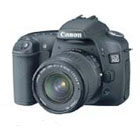 |
| Key Features | 8 megapixels, Picture Styles | |
| Uniqueness | Speed | |
| Great For | Action | |
| Level | Advanced to semi-professional | |
| Avg. Kit Price | $1,200 | |
| Competitors | Nikon D200 | |
| The Canon 30D is for advanced action photographers who want a fast, 5-photo-per-second continuous shot rate. This camera also includes the Picture Styles feature available on the Rebel xTi. | ||
Compare prices for the 30D at Shopzilla , Amazon or Adorama , Amazon or Adorama
|
||
Canon EOS 40D |
|
Release Date | September 2007 |
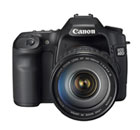 |
| Key Features | 10 megapixels, dust control, 3 inch live view LCD, weather sealed | |
| Uniqueness | Fastest consumer DSLR | |
| Great For | Action | |
| Level | Advanced to semi-professional | |
| Avg. Kit Price | $1,300 | |
| Competitors | Nikon D300, Sony DSLR-A700, Olympus E-3 | |
| The Canon 40D is one of the fastest consumer digital SLR you can buy. It's can take 6.5 photos per second up to a maximum of 75 JPG images or 17 RAW. In addition to this blazing fast speed, the camera includes a completely updated 9-point autofocus, a fast image processor (to transfer photos to the memory card), Canon's dust control, and the addition of a live view mode on the camera's large 3 inch LCD screen. With a rugged frame and weather-resistant seals and gaskets, the 40D is designed for aggressive use. | ||
Compare prices for the 40D at Shopzilla , Amazon or Adorama , Amazon or Adorama
|
||
Canon 5D |
Release Date | October 2005 |
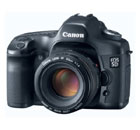 |
| Key Features | 12.8 megapixels, 9-point autofocus | |
| Uniqueness | Full frame sensor | |
| Great For | Film SLR converts | |
| Level | Advanced to semi-professional | |
| Avg. Kit Price | $2,800 | |
| Competitors | None | |
| The key feature of the Canon 5D is that it is a full-frame digital SLR, which means that this camera has no crop factor. This Canon digital SLR captures the same field of view as a similar Canon film SLR camera. | ||
Compare prices for the 5D at Shopzilla , Amazon or Adorama , Amazon or Adorama
|
||
Nikon Digital SLRs
Let's continue this digital SLR buyer guide by talking about the #2 company when it comes to these cameras.
While the Nikon line of digital SLR cameras have certainly had their fair share of press and awards, it's the Nikon lenses that really take top honors.
Nikon started out as an optics company, and Nikon fanatics will be happy to tout the virtues of their lenses when it comes to capturing images with superior quality.
Many professional photographers shoot with Nikon cameras and lenses, and there are a lot of pro-quality Nikon digital SLRs competing with those available from Canon.
In the consumer digital SLR market, Nikon offers several excellent cameras for you to choose from.
Nikon D40 |
|
Release Date | December 2006 |
 |
| Key Features | 6.1 megapixels, 2.5in. LCD, SD Memory | |
| Uniqueness | Helpful LCD | |
| Great For | Learning photography | |
| Level | Beginner | |
| Avg. Kit Price | $525 | |
| Competitors | Canon 350D, Pentax K110D, Samsung GX-1L | |
| The D40 features an innovative LCD display that actually SHOWS you how changing camera settings affects your images. It's a great tool for photographers who are learning terms like aperture, shutter speed and ISO. The D40 is also the smallest, lightest and cheapest Nikon digital SLR. | ||
Compare prices for the D40 at Shopzilla , Amazon or Adorama , Amazon or Adorama
|
||
Nikon D40x |
Release Date | April 2007 |
 |
| Key Features | 10 megapixels, small size, light weight | |
| Uniqueness | Helpful LCD | |
| Great For | Learning photography | |
| Level | Beginner | |
| Avg. Kit Price | $700 | |
| Competitors | Pentax K100D, Samsung GX-1S | |
| For a bit more than the D40, you can go for the D40x which is - for all intents and purposes - a 10 megapixel version of the D40. It is just as small and light as the D40 and features the same helpful information display on the LCD. | ||
Compare prices for the D40x at Shopzilla , Amazon or Adorama , Amazon or Adorama
|
||
Nikon D80 |
|
Release Date | August 2006 |
 |
| Key Features | 10 megapixels, fast response | |
| Uniqueness | Multiple exposures | |
| Great For | Action | |
| Level | Intermediate to advanced | |
| Avg. Kit Price | $1,120 | |
| Competitors | Canon xTi, Olympus E-410 and E-510, Pentax K10D, Samsung GX-10, Sony A100 | |
| The D80 falls in the middle ground between the entry-level D40 and the more advanced D200. Put simply, if you want a camera that performs (and shares many of the features on the D200) but don't want to pay up for a D200, then the D80 is an excellent choice. It's a great "upgrade" camera from the Nikon D50 (which is no longer available). | ||
Compare prices for the D80 at Shopzilla , Amazon or Adorama , Amazon or Adorama
|
||
Nikon D200 |
Release Date | November 2005 |
 |
| Key Features | 10 megapixels, fast response | |
| Uniqueness | Speed | |
| Great For | Action | |
| Level | Advanced to semi-professional | |
| Avg. Kit Price | $1,450 | |
| Competitors | Canon 30D | |
| The D200 is an ultra-fast camera with an 11-point autofocus and a 5 photo-per-second continuous shot rate. The most common camera controls are available from one-touch buttons, so altering settings on the fly based on the available light and subject matter is easy to do. The D200 has received rave reviews and is one of the top rated digital SLR cameras. | ||
Compare prices for the D200 at Shopzilla , Amazon or Adorama , Amazon or Adorama
|
||
Nikon D300 |
Release Date | November 2007 |
 |
| Key Features | 12.3 megapixels, 51-point autofocus, dust control, live view | |
| Uniqueness | Fastest consumer SLR | |
| Great For | Action | |
| Level | Advanced to semi-professional | |
| Avg. Kit Price | $1,800 | |
| Competitors | Canon 40D, Sony DSLR-A700, Olympus E-3 | |
| If you're looking for ridiculous speed in a digital SLR camera, then look no further - the Nikon D300 is the camera for you! With its standard EN-EL3e battery the camera zips along at 6 photos per second up to a maximum of 100. If you add the optional MB-D10 battery grip, that speed increases up to 8 photos per second. This speed is paired with a new dust control system, a new live view mode, an advanced autofocus and metering system (called Scene Recognition), enhanced dynamic range (active D-lighting) and weather resistant seals. | ||
Compare prices for the D300 at Shopzilla , Amazon or Adorama , Amazon or Adorama
|
||
Olympus Digital SLRs
No doubt about it - Olympus is an innovator when it comes to digital SLR technology.
Take the following:
- Olympus digital SLRs were the first to include dust control systems
- An Olympus SLR was the first to have a live view LCD (like compact digital cameras)
- Olympus will be the first company to release a camera with dust control, image stabilization and a live view LCD (the E-510)
If you're not wedded to Canon or Nikon, I encourage you to take a good close look at some of the Olympus digital SLR cameras - you might find that they're a good match for your photography style.
Olympus E-410 |
Release Date | June 2007 |
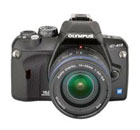 |
| Key Features | 10 megapixels, dust control, compact and light | |
| Uniqueness | Live view | |
| Great For | Travel | |
| Level | Beginner | |
| Avg. Kit Price | $800 | |
| Competitors | Canon Rebel xTi, Nikon D40x | |
| The E-410 packs a lot of punch into its compact frame. Even though it's almost the same size as a compact digital camera, it still includes dust control and a live view LCD screen, making the transition from compact to SLR much easier. | ||
Compare prices for the E-410 at Shopzilla , Amazon or Adorama , Amazon or Adorama
|
||
Olympus E-510 |
|
Release Date | July 2007 |
 |
| Key Features | 10 megapixels, dust control, compact and light | |
| Uniqueness | Live view | |
| Great For | Travel and low-light | |
| Level | Intermediate to advanced | |
| Avg. Kit Price | $900 | |
| Competitors | Canon Rebel xTi, Nikon D40x | |
| Identical to the E-410 in many ways, the E-510 includes one important enhancement: a built-in image stabilizer. The stabilizer will work with any Olympus lens that you attach to the camera, and will help when taking photos of still subjects in low light without flash. | ||
Compare prices for the E-510 at Shopzilla , Amazon or Adorama , Amazon or Adorama
|
||
Olympus E-3 |
Release Date | November 2007 |
 |
| Key Features | 10 megapixels, dust control, live view, built-in image stabilization, weather sealed | |
| Uniqueness | Fast autofocus | |
| Great For | Action and low light | |
| Level | Intermediate to advanced | |
| Avg. Kit Price | $1,700 | |
| Competitors | Canon 40D, Nikon D300, Sony DSLR-A700 | |
| The E-3 is the flagship Olympus digital SLR camera, designed with professional photographers in mind. Advanced amateurs with enough pocket change will benefit from the E-3's 5 photo per second shooting speed, dust control system, built-in image stabilization, live view LCD (that flips out from the camera body and rotates), weather sealing and an ultra-fast 11-point autofocus system. New accessories for the E-3 include the HLD-4 battery grip (for longer shooting) and two new flash units (FL-50R and FL-36R) that can be activated wirelessly from the E-3's main flash. | ||
Compare prices for the E-3 at Shopzilla , Amazon or Adorama , Amazon or Adorama
|
||
Pentax/Samsung Digital SLRs
I'm lumping Pentax and Samsung together for this digital SLR buyer guide because their cameras are fairly identical.
This is not a real surprise - Samsung wanted to get a piece of the digital SLR pie, but needed an established company to work with. They chose Pentax.
Pentax had been producing digital SLR cameras long before Samsung entered the market, which makes many Samsung cameras hard - if not impossible - to tell apart from the Pentax models.
The distinction is even harder to make since the Samsung cameras are compatible with all of the Pentax lenses (although there are a few lenses that bear the Samsung brand).
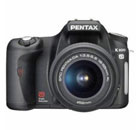
Pentax K100D |
Sample K100D Photos |
Release Date | July 2006 |
 |
| Key Features | 6 megapixels, image stabilization | |
| Uniqueness | Low cost | |
| Great For | Travel and low-light | |
| Level | Beginner | |
| Avg. Kit Price | $470 | |
| Competitors | Canon Rebel XT, Nikon D40 | |
| The K100D comes with a great extra feature: built-in image stabilization. The K100D is the least expensive camera you can buy that includes this feature, and it works with every Pentax lens you can attach to the camera. The Samsung equivalent is the GX-1S. | ||
Compare prices for the K100D at Shopzilla , Amazon or Adorama , Amazon or Adorama
|
||
Pentax K100D Super |
Release Date | August 2007 |
 |
| Key Features | 6 megapixels, image stabilization, dust control | |
| Uniqueness | Low cost | |
| Great For | Travel and low-light | |
| Level | Beginner | |
| Avg. Kit Price | $600 | |
| Competitors | Canon Rebel XT, Nikon D40 | |
| The K100D Super represents several advancements over the older K100D model. While it still has the built-in anti-shake that's available on the K100D, the Super adds a dust control system along with compatibility with EVERY Pentax lens ever made. This makes the K100D Super a great transition camera for anyone with a large collection of Pentax film SLR lenses. | ||
| Compare Prices for the K100D Super at Amazon or Adorama | ||
Pentax K10D |
Sample K10D Photos |
Release Date | December 2006 |
 |
| Key Features | 10 megapixels, dust control, image stabilization | |
| Uniqueness | Weather sealed | |
| Great For | Rugged travel, low-light | |
| Level | Intermediate to advanced | |
| Avg. Kit Price | $797 | |
| Competitors | Canon Rebel xTi, Nikon D80, Sony A100 | |
| Not to be out-done in the high-end SLR camera market, Pentax introduced the K10D. While it includes a slew of features common to other 10 megapixel digital SLR cameras, it also has some "extras" not available on any other similar SLRs like complete weather sealing, and a button that allows you to switch from RAW to JPG image capture. The Samsung equivalent is the GX-10. | ||
Compare prices for the K10D at Shopzilla , Amazon or Adorama , Amazon or Adorama
|
||
Sony Digital SLRs
A late player to the digital SLR camera market, Sony jumped in when they acquired what was left of Konica Minolta.
Konica Minolta had been producing their own line of digital SLR cameras (called Maxxum), but was losing ground against Canon, Nikon and Olympus.
In 2006 they ceased production of digital SLR cameras, and sold operations to Sony. Not long after, Sony released their very first digital SLR camera, with the promise of more to come.
Sony ALPHA DSLR-A100 |
|
Release Date | July 2006 |
 |
| Key Features | 10 megapixels, dust control, image stabilization | |
| Uniqueness | First Sony DSLR | |
| Great For | Travel and low-light | |
| Level | Intermediate to advanced | |
| Avg. Kit Price | $700 | |
| Competitors | Canon Rebel xTi, Nikon D80, Pentax K10D, Samsung GX-10 | |
| The A100 is the first digital SLR released by Sony, the result of their acquisition of the Konica Minolta company in 2006. The A100 has a lot of advanced features in addition to its 10 megapixels, including a dust control system, built-in image stabilization and eye-start autofocus. The drawbacks to this camera are a severe lack of customer support when the camera fails, and more image noise at high ISO than the competition. | ||
Compare prices for the A100 at Shopzilla , Amazon or Adorama , Amazon or Adorama
|
||
Sony ALPHA DSLR-A700 |
Release Date | October 2007 |
 |
| Key Features | 12.2 megapixels, dust control, image stabilization | |
| Uniqueness | High speed | |
| Great For | Action | |
| Level | Intermediate to advanced | |
| Avg. Kit Price | $1,400 | |
| Competitors | Canon 40D, Nikon D300, Olympus E-3 | |
| The A700 is Sony's second digital SLR camera, and sports a larger sensor and a faster shooting rate than the A100 (5 photos per second). A new 11-point wide area autofocus is designed to focus quickly on any subject. The A700 includes the built in image stabilization and dust control that are also available on the A100. The camera body is dust and moisture resistant, and the magnesium alloy frame makes the camera lightweight but sturdy. | ||
Compare prices for the DSLR-A700 at Shopzilla , Amazon or Adorama , Amazon or Adorama
|
||
Fuji Digital SLRs
I've put the Fuji cameras here at the very end of this digital SLR buyer guide simply because they don't produce as many as the other manufacturers and they cater to a specialty market: professional wedding photographers.
The innovation inside the Fuji digital SLR cameras is a sensor with greater dynamic range, which is more capable of capturing detail in bright highlights and dark shadows (perfect for a white dress right next to a black tux).
Fuji has also recently added Face Detection technology to their cameras: this allows the group portrait photographer to quickly zoom in on faces (using the LCD) to make sure that everyone's eyes are open and that all the faces are in focus.
The Fuji digital SLR cameras are compatible with Nikon lenses.
Fuji S5 Pro |
Release Date | February 2007 |
 |
| Key Features | 12 megapixels, wide dynamic range | |
| Uniqueness | Face detection | |
| Great For | Weddings | |
| Level | Semi-professional to professional | |
| Avg. Price | $1,800 | |
| Competitors | None at the consumer level | |
Compare prices for the S5 Pro at Shopzilla , Amazon or Adorama , Amazon or Adorama
|
||

| Digital SLR Home |


