Continuous Photo Speed and Buffer
Die-hard action photographers need digital SLR cameras with a high continuous photo speed and buffer.
This is because they know that a fraction of a second is the difference from a pretty good photo and one that is downright exceptional.
When you're dealing with fractions of a second, you need a camera that is blazing fast.
The two key indicators of the speed of a digital SLR camera are its continuous photo speed and buffer.
Continuous Photo Speed
Every digital SLR camera has a mode where you can take rapid consecutive photos.
All you have to do is hold down the camera's shutter release button, and the camera will keep snapping the photos off one by one.
Continuous photo speed is the # of photos a camera can take in one second.
Specification sheets will often list the continous photo speed of an SLR in frames per second or FPS, which is equivalent to photos per second.
This measurement makes it easy to tell if one camera is faster than another: if one camera has a speed of 3fps while another has a speed of 5fps, the 5fps camera can take more consecutive photos in less time.
Here are some digital SLR cameras and their respective continuous photos speeds:
| Camera | Speed (fps) |
| Canon 40D | 6.5 |
| Nikon D300 | 6 |
| Olympus E-520 | 3.5 |
| Sony DSLR-A200 | 3 |
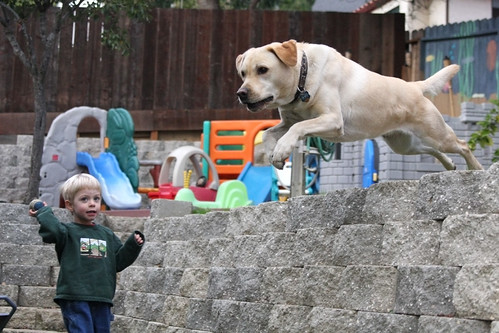
And here's the sort of shot you can capture when you're using an SLR with a fast continous photo speed (taken with a Canon 40D):
Maxxing Out the Buffer
While this may sound like something that you do to your car to make it shine, it's not.
A buffer is a temporary storage space - the more photos it can hold, the longer the camera goes before slowing down.
Here's the rationale: every time you take a photo with your digital SLR, it has to do some processing - it can't just instantly store the photo on the memory card.
While the camera is processing the photo (before it saves to to the card) it stores the image in a temporary memory space called a buffer.
The larger the buffer, the more images the camera can store in temporary memory.
Once the buffer fills up, the camera slows down, and can no longer take photos at its maximum speed. For example, a 5fps camera may slow down to 2fps if the buffer fills up.
Since this is the case, modern digital SLRs all have very large buffers to ensure that the camera never slows down.
| Camera | Buffer Size |
| Canon 40D | 75 |
| Nikon D300 | 100 |
| Olympus E-520 | Unlimited * |
| Sony DSLR-A300 | Unlimited * |
* These SLRs take photos at top speed until the memory card is full
More Speed = More Money
Before you get excited about the possibilities of a camera that can take photos at 5fps with a buffer of 100 images, make sure that you're going to use it.
I only say this because to get a camera this fast, you will pay a significant premium.
The jump from 3fps to 5fps will increase the camera price by about $500. While a 5fps camera also includes many other advanced features that justify the price, a principal reason to get a camera this fast is for action photography.
If all you take is portraits then being able to take 5 photos per second of your stationary subject is a bit ridiculous.
If - on the other hand - you enjoy taking snapshots at NASCAR and Formula One races, then a 5fps speed is fully justified.
Just keep in mind that while a blazing-fast camera may seem awfully tempting, you have to be prepared to pay the extra cost since a high continuous photo speed and buffer don't come cheap.
Buying Tip
Get a camera with a fast continuous speed and large buffer if:
- You want to take a lot of photos of sporting events
- You take photos of fast-moving subjects you can't control
- You don't mind paying a premium to capture a shot
Don't worry about speed and buffer size if:
- You primarily take photos of static subjects
 Define SLR Terms Define SLR Terms |
Digital SLR Home |

|