What's a Neutral Density Filter?
Simply put, a neutral density (ND) filter reduces the amount of light entering your digital SLR lens.
You can choose how much the light is reduced by getting a 2x, 4x or even 6x ND filter.
As the number gets higher, the filter becomes darker and less light enters the lens.
What's the Point?
Hold on a sec.
Isn't photography all about getting more light into the camera?
There are a large number of lenses with wide maximum apertures (that let in more light) and many digital SLRs can be set to high ISOs (increasing the camera's sensitivity to light).
These two features would seem to indicate that more light is better, and it often is...unless you really enjoy using slow shutter speeds.
When you use slow shutter speeds, it blurs subjects in motion.

Slow shutter speeds are commonly used to turn cascading water into smooth sheets, and to illustrate that a subject is in motion.
Let's say that you're taking a photo of some waterfalls in the middle of the day, and want to use a slow shutter speed to blur the water.
If it's a bright sunny day, you won't be able to.
There is a lower limit on shutter speed in the middle of the day - you can only slow it down so much before the photo becomes over-exposed.
If you put a neutral density filter on your lens (and reduce the amount of light) then you can slow the shutter speed down enough to get the right effect.
The more available light, the more powerful ND filter you must use.
The Catch
If you don't already own a tripod, you'll have to get one to use with your ND filter.
Since the point of this filter is to reduce light and slow down shutter speeds, your camera needs a stable base of support.
Without a tripod you won't just get blurred water: your entire photo will turn out blurry.
Graduated Neutral Density
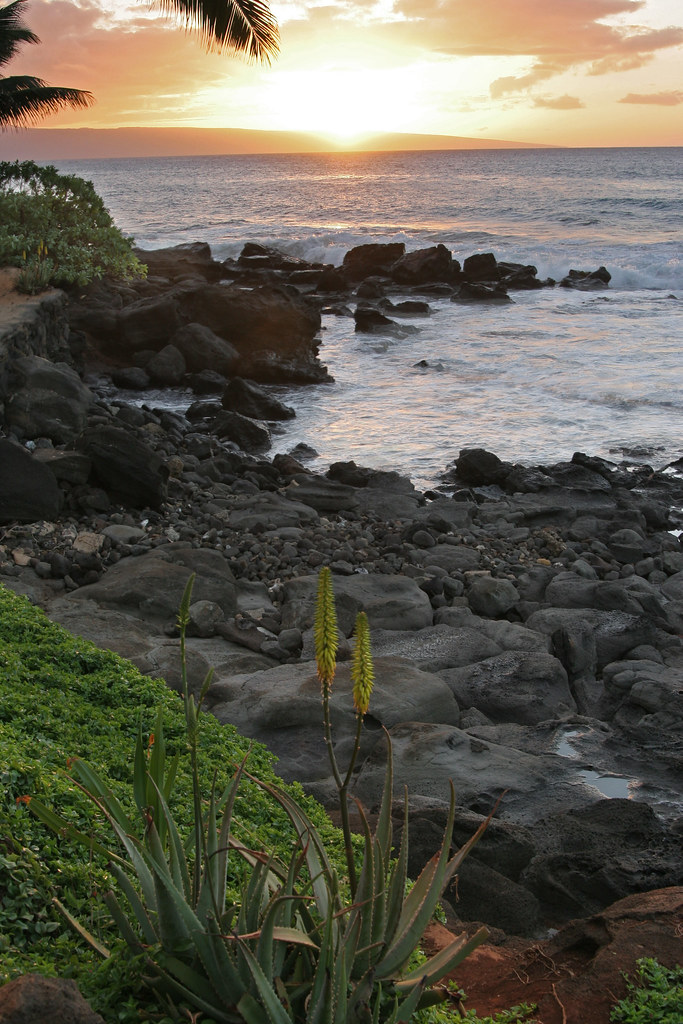
A graduated ND helps capture shadow and light
A graduated neutral density filter is specialized, but is useful when it comes to digital SLR cameras.
Here's why: your eyes have incredible dynamic range.
If you standing on a rocky shore watching the sun go down, your eyes are able to see detail in both the shadows and the highlights.
You digital SLR camera can't - it has a limited range from shadow to light.
If you want to take a photo of the scene in front of you, you have to make a choice. If you correctly expose for the bright sunlight, anything in shade is going to be under-exposed  .
.
If you correctly expose the photo for the shade, the bright sunlit areas will turn pure white  .
.
A graduated neutral density filter solves this problem.

The filter reduces half the light entering the lens, and lets the other half in at 100%.
Rather than being split down the middle 50/50, the filter gradually blends from the side that blocks light to the side that lets it through.
If you adjust the filter so that the bright part of the scene is blocked while the shadow area is not, your camera can capture the photo correctly.
 Polarizing Filter Polarizing Filter |
Digital SLR Home | Warming Filter |